

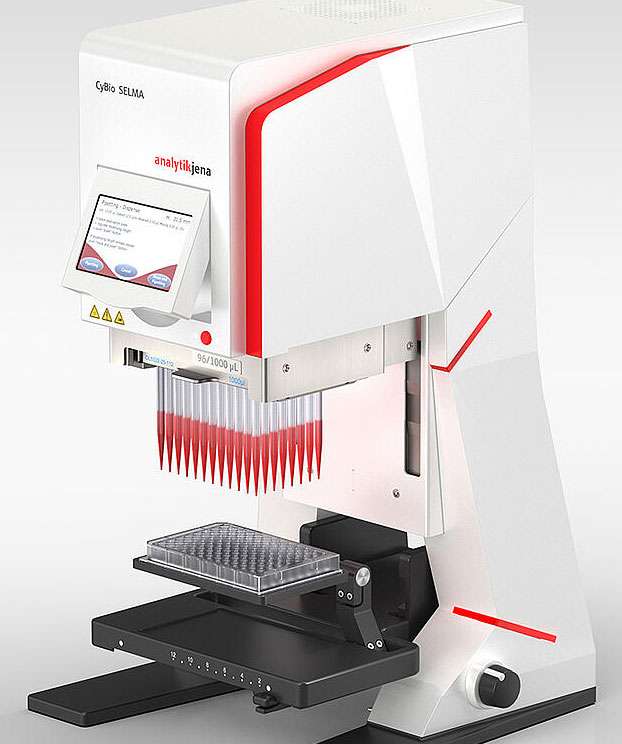


✔️ Fast and precise processing of 96- and 384-well microplates without the need for programming
✔️ Simple and intuitive operation via user guided methods
✔️ Easy and fast tip changing with ready to use CyBio TipTrays
✔️ Error-free and reproducible results due to 96 or 384 parallel pistons and proven tip sealing principle
✔️ Memory function and automatic use of pipetting heights and liquid handling parameters
✔️ Applications like the replication or the reformating of whole microplates can be executed in seconds
✔️ Save your valuable lab space
✔️ Simplify your pipetting tasks
✔️ Comfortable and Precise in every detail

✔️ Complete Spectrum: Clear signals from UV-A to Near Infrared (NIR), multiplexing for up to six targets simultaneously
✔️ Freedom of Choice: Compatible with all standard dyes, consumables, reagents, and assays
✔️ Color Modules: Select freely and purchase individually
✔️ Temperature Accuracy: ± 0.15 degrees Celsius (market standard: up to ± 0.4 degrees Celsius)
✔️ Application Support: Direct from the manufacturer
✔️ Open Access: Raw data freely accessible (or presented as interpolated curves)
✔️ Noise Level: Barely audible


In addition to the determination of AOX in drinking water and municipal and industrial waste waters, the parameter AOX is among others also determined in sewage sludges, soils and sediments. It is regulated in the norms EN16166 and DIN 38409-S18. The AOX of solids, such as paper or cardboard (ISO 11480) used in the paper processing industry can also be determined in addition to the AOX of the waste water. Sewage sludge that is to be applied to agricultural land as fertilizer in particular or which is used for thermal recycling, is subject to strict controls on its AOX content.
These tests are necessary because many organic halogen compounds are toxic and persistent. They dismantle slowly and accumulate through the food chain. Therefore, the sum parameter AOX is ecotoxicologically highly relevant. Compared to other chemical methods, AOX determination is relatively young. It was developed in the mid-1970s and established itself as a standard parameter in the list of German standard methods for water, wastewater and sludge analysis in 1985.
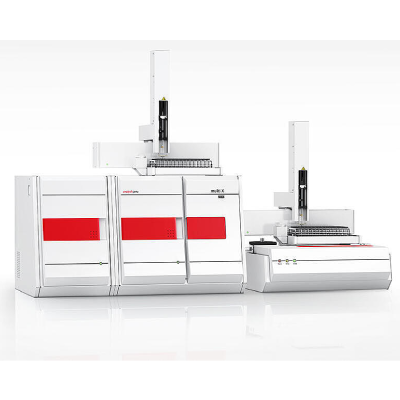
Laboratories looking for reliable elemental analysis solutions for carbon, sulfur, nitrogen, and chlorine (C, N, S, X) find in our multi EA 5100 one of the most advanced and flexible analyzers in this field. Its sister device, the multi EA 4000, enables the determination of TOC/TIC, EC/RC, and BOC in solids.
Completing the combustion elemental analysis portfolio is the compEAct, a high-throughput, easy-to-use sulfur and nitrogen analyzer that can operate 24/7. An extensive range of accessories allows further customization of all devices to individual application requirements.
With the contrAA 800 platform we offer the most advanced atomic absorption spectrometry (AAS) systems worldwide. The sensitivity and robustness of the contrAA 800 series rivals even ICP systems thanks to its unique high-resolution continuum source atomic absorption technology (HR-CS-AAS).
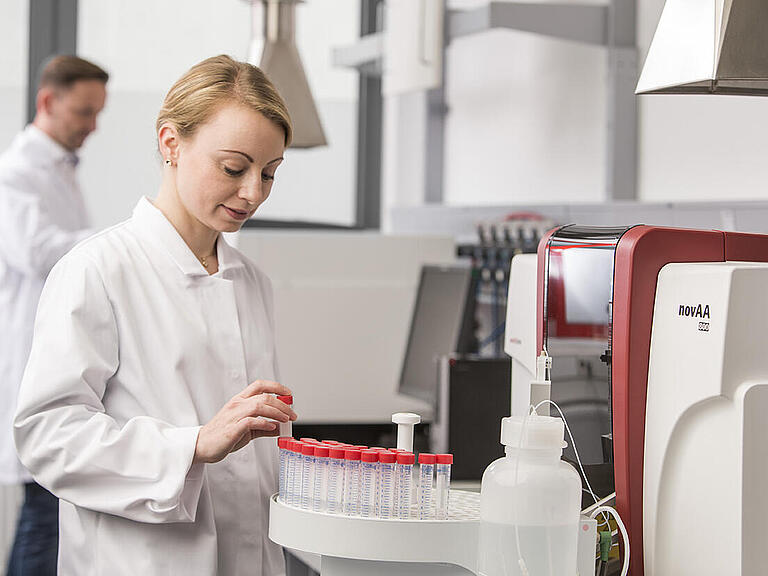
Next to the high-end contrAA 800 systems we offer a variety of additional atomic absorption spectrometers for a wide range of analytical tasks and requirements: The entry-level novAA 800 AAS is an optimal spectrometer for routine applications and can operate even in harsh environemnts. For certain trace analyses our AAS of the ZEEnit series with Zeeman background correction of the third generation are ideal.
As a robust, versatile and high-precision analytic method, mass spectrometry with inductively coupled plasma (ICP-MS) has earned its place in inorganic elemental analysis. Characterized not only by its superior detection limits, this analytic method is also hard to resist thanks to its rapid measurement rate, unique diversity of applications and its robust performance.
The ICP-MS analytic process has become established in a wide array of industries as a powerful method for detecting inorganic elements such as mercury, lead and cadmium. The palette of applications for trace element analysis is broad, ranging from applications in environmental analysis such as potable water quality monitoring, analysis of clinical samples, measurement of isotope ratios in food analysis, to research topics such as measurement of single cells and nanoparticles.
Thanks to continual technical optimization of the ICP-MS analytic method, users today can benefit from ever-improving detection limits at the same as increased sample throughput and falling operational expenses. Meanwhile, utilization of the noble gas argon has been successfully reduced, benefiting sustainability.

One of the primary applications of optical emission spectroscopy based on inductively coupled plasmas (ICP OES) is to analyze elements in very low concentrations. If considering metals such as mercury or metalloids like arsenic, then the reason for these analyses is not hard to understand. Soil sample investigations, foodstuff testing and drinking water analyses are all carried out for the health of people and the environment, but the environmental sector is just one of many important applications for ICP OES. Today, ICP OES plays a crucial role in other fields as well. Trace elements in fuels can cause premature wear on engines. The slightest impurities in metals can compromise the most important properties of those materials. Heavy metals contaminate drinking water for decades. High-frequency tests with low detection limits have therefore become the standard in many fields.
ICP OES takes on this role, superseding other methods of elemental analysis. Short analysis times, low sample preparation effort, multi-element detection and exceptional device sensitivity are hallmarks of this method. The latest generation of ICP OES devices makes elemental analysis even more user-friendly, economical, and flexible.

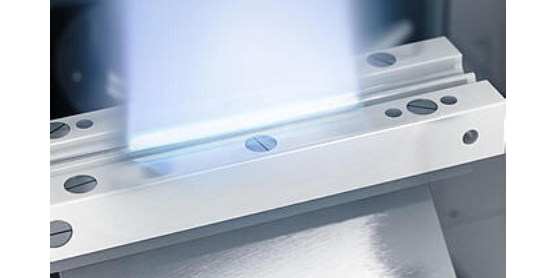

Whether measuring chromatic properties of foodstuffs, analyzing wastewater quality according to standard procedures, or verifying the concentration and purity of a drug’s active ingredient: UV/Vis spectroscopy is the right method for these applications. This spectroscopic method plays a role in every industrial sector, but especially in pharmaceuticals, environmental engineering, and the chemicals and foodstuffs industry. Here, spectrophotometers are an integral part of special applications and routine analyses, where they are used to ascertain the properties and concentration of individual atoms, molecules, or ions.

High-temperature catalytic combustion is the method of choice for analyzing both TOC and TNb. The advantage of this method is the complete oxidation of all organic carbon compounds, including those in a particle bound state. Discover the multi N/C 2300 series, our compact specialists for high-matrix samples and small sample volumes, and the efficient all-rounders of our multi N/C 3300 series, specifically designed for high throughput applications.

The multi N/C 4300 UV is ideal for TOC analysis with wet chemical UV digestion. Flow injection technology combined with a high-performance UV reactor make these devices, with their high injection volumes, the perfect ultra-trace level analyzers to determine TOC. Hard-wearing and robust, they are also suitable for samples with aggressive matrices such as highly acidic or alkaline solutions.


✔️ Space-saving – compact design for every laboratory
✔️ Modular – Adaptable and flexible, the CyBio FeliX can be expanded to meet your needs
✔️ Cost-saving – With its interchangeable heads and adapters, CyBio FeliX allows you to save by miniaturizing samples and reagents.